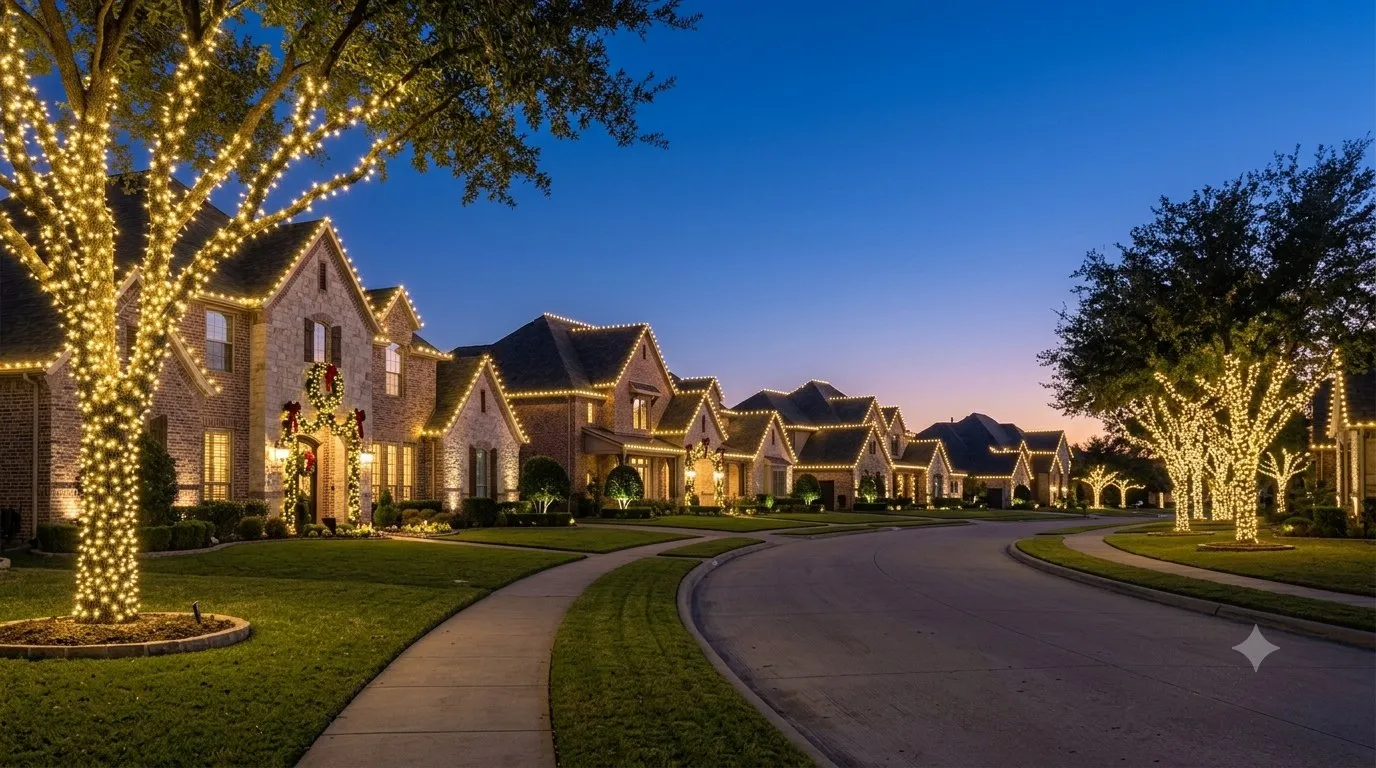
Stand in a big-box seasonal aisle in October and the boxes say things like "commercial grade!" for $24.99. Then a professional quote says a roofline costs $600 and up, and the natural question is: what exactly am I paying for? Fair question. Here's the plain-English answer — and, honestly, the cases where the aisle is still the right call.
It starts with the wire, not the bulbs
Retail strings are a fixed product: bulbs pre-spaced on a set length of light-duty wire, with molded plugs at each end and a fuse designed for a few seasons of gentle use. Professional C9 line is a system: heavy-gauge bulk wire with sockets punched at the spacing the job needs, cut to the exact length of each roofline run on site, with weather-sealed terminations exactly where the design wants power to enter and stop.
That one difference — cut-to-fit versus fixed-length — is most of what your eye reads as "professional." No doubled-up sections where a 25-foot string met a 19-foot fascia. No dark last two feet. No extension cord draped down a column. Lines end at corners because the line was made to end at that corner.
Bulbs: LED retrofits vs. molded strings
Pro C9 bulbs are individually socketed, faceted LED retrofits — bright enough to read from the street at 9pm, warm enough (2700K-ish) to look like Christmas instead of a runway, and individually replaceable in seconds during a mid-season service call. When one retail bulb section fails, you're usually replacing the whole string — in December, from stock that sold out in November.
Connections are where DIY displays die
Ask anyone who's hung their own lights: the failure is rarely the bulb, it's the connection. Plug-to-plug joints wick water, gutters channel rain right through them, and one wet joint takes down a whole run. Professional installs minimize connection count by design (fewer, longer custom runs), seal what remains, and put power where the electrician would want it rather than where the last string happened to end. Add automatic timers sized for the actual load, and the system runs all season without anyone touching it.
Lifespan and the real cost line
Retail strings are engineered to a price point — a few seasons of careful use, less on a Texas roofline that goes from 80°F install weather to an ice storm in the same month. Commercial line and LED retrofits are engineered for years of outdoor duty; it's why we can offer all-season repair coverage and re-install the same owned display year after year. Spread over its life, the "expensive" hardware usually costs less per season than replacing aisles of strings — before counting your Saturdays.
The part nobody puts on the box: the roof
Every year, U.S. emergency rooms treat thousands of holiday-decorating falls. A professional install means insured crews with the right equipment on your roof instead of you on a borrowed ladder over a brick walkway. For two-story DFW rooflines — Frisco gables, Southlake entries — this alone is the argument.
When the big-box aisle is still right
Honesty clause: professional installation isn't for every situation. A single-story ranch with a walkable roofline and a homeowner who enjoys the ritual? Go DIY with pride — buy LED, check plugs, use clips not staples. Renting for one season? DIY. Budget capped under a few hundred dollars? A modest DIY display beats no display. The math tips professional when height enters the picture, when the design includes trees and garland, when you want it handled all season — or when the goal is the house the street slows down for.
The short version
Same word, different products: fixed-length consumer strings versus a cut-to-fit commercial lighting system with sealed connections, replaceable bulbs, timers, and someone insured to stand on your roof. That's the $600 — and it's why the pro display down the street looks drawn with a pen.